

When chronically swollen nasal turbinates make it difficult to breathe through your nose, everyday activities like sleeping, exercising, and even having a conversation can become frustrating. Medications and allergy treatments may provide relief for some people, but persistent turbinate enlargement sometimes requires a more direct approach.
At New York ENT, David O. Volpi, MD, MPH, FACS, provides comprehensive evaluation and treatment for nasal obstruction in New York City. A board-certified otolaryngologist with more than 30 years of private practice experience, Dr. Volpi has extensive expertise in diagnosing conditions that interfere with nasal breathing. For appropriate patients, he performs minimally invasive turbinate reduction to reduce enlarged tissue, improve airflow, and preserve the turbinates’ important role in normal nasal function.
What Is Turbinate Reduction?
Turbinates are structures located along the sidewalls inside your nose. Covered by mucous membrane, they help warm, humidify, and filter the air you breathe. Most people have three pairs of turbinates, with the inferior turbinates being the largest.
When these structures become chronically enlarged or swollen (a condition known as turbinate hypertrophy), they can restrict the nasal airway and make breathing more difficult.
Turbinate reduction is a procedure that reduces enlarged turbinates to create more room for air to pass through the nose. At New York ENT, radiofrequency energy can precisely reduce turbinate tissue while minimizing disruption to surrounding structures.
What Causes Enlarged Turbinates?
Turbinates naturally expand and contract throughout the day. However, chronic irritation or structural problems can keep them enlarged.
Common contributing factors include:
- Chronic or severe allergies
- Recurrent nasal inflammation
- Environmental irritants
- Chronic sinus or nasal conditions
- A deviated septum
- Certain medications
- Changes in airflow through the nasal passages
Because nasal congestion can have several potential causes, an ENT evaluation is important before deciding whether turbinate surgery is appropriate.
When Is Turbinate Reduction Recommended?
Turbinate reduction may be considered when enlarged turbinates contribute to persistent nasal obstruction, and symptoms do not improve sufficiently with conservative treatment.
You may experience chronic nasal congestion, difficulty breathing through one or both sides of your nose, mouth breathing, disrupted sleep, or snoring. Nasal obstruction can also complicate breathing for some people with obstructive sleep apnea (OSA).
Before recommending surgery, your ENT physician may suggest treatments such as nasal sprays, allergy management, or other medications depending on the underlying cause. Turbinate reduction is generally considered when these approaches haven’t provided adequate relief or when significant turbinate enlargement contributes to the obstruction.
How Is Turbinate Reduction Performed?
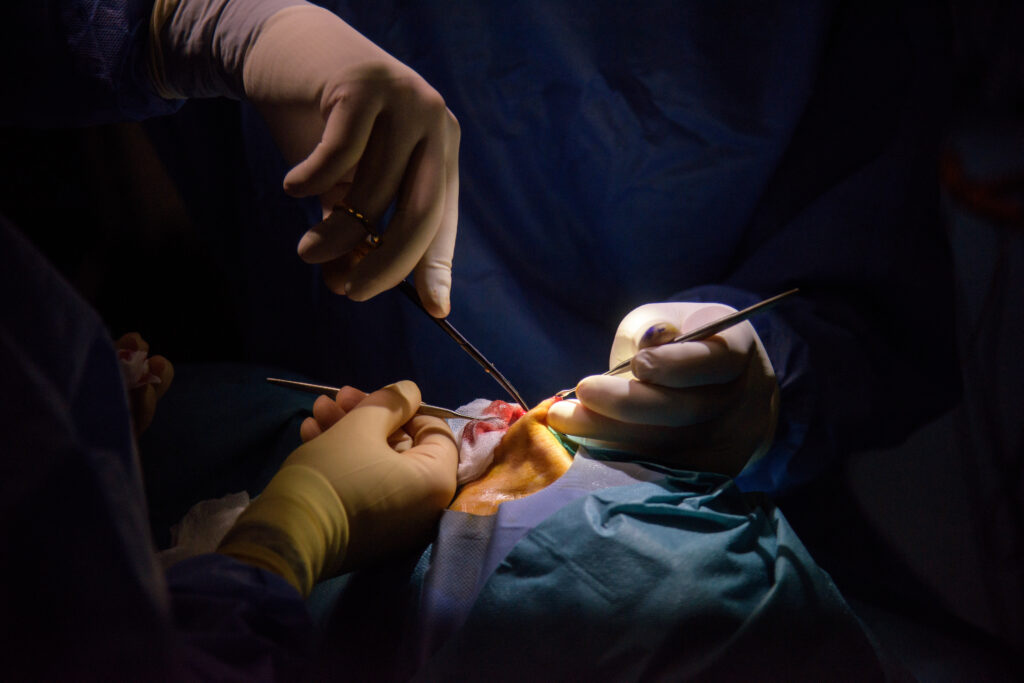
Turbinate reduction is typically a minimally invasive procedure. Radiofrequency energy is delivered to targeted turbinate tissue, causing it to shrink gradually while preserving as much normal tissue and function as possible.
The procedure can often be completed in an outpatient setting and generally takes less than an hour. The specific anesthesia or numbing approach used will depend on the technique, your medical needs, and your physician’s recommendations.
Because the goal is to reduce, not unnecessarily remove, turbinate tissue, modern techniques focus on improving airflow while maintaining the turbinates’ natural function.
What Are the Benefits of Turbinate Reduction?
For appropriately selected patients, turbinate reduction may provide several advantages, including:
- Improved airflow through the nose
- Reduced chronic nasal congestion
- Easier nasal breathing
- Minimally invasive treatment
- Limited downtime
- Reduced dependence on mouth breathing
- Potential improvement in sleep disrupted by nasal obstruction
Results vary depending on the underlying cause of your symptoms and whether other nasal conditions are present.
What Is Recovery Like After Turbinate Reduction?
Recovery is generally manageable, although temporary congestion, swelling, dryness, or mild discomfort can occur as the nasal tissues heal. Some patients feel more congested at first before airflow improves.
Your physician will provide detailed aftercare instructions, which may include using saline sprays or rinses and avoiding strenuous activity for a short period. You should also avoid picking or irritating the healing tissue inside your nose.
Improvement may become noticeable as swelling subsides and the treated turbinates gradually shrink. Your ENT physician can explain the expected recovery timeline based on the technique used.
Why Choose New York ENT for Turbinate Reduction?
Dr. Volpi completed his otolaryngology residency at New York Eye and Ear Infirmary and is a Fellow of the American College of Surgeons. With more than three decades of clinical experience, he takes an individualized approach to nasal obstruction rather than assuming every patient needs the same procedure. When turbinate reduction is appropriate, Dr. Volpi uses modern, minimally invasive techniques designed to improve breathing while preserving healthy nasal function and minimizing downtime.
Schedule a Turbinate Reduction Consultation in NYC
You do not have to accept persistent nasal obstruction as part of everyday life. If chronic congestion, enlarged turbinates, or difficulty breathing through your nose is affecting your comfort or sleep, an evaluation can help determine the cause and your treatment options.
Schedule a consultation with the experienced, board-certified ENT physicians at New York ENT to find out whether turbinate reduction may be right for you. Contact 212-873-6036 to schedule your appointment in New York City.